Showing posts with label poa. Show all posts

Wednesday, May 26, 2021

Spread It, Vertical It, Trim It, Fill It and Please DON'T Step Through It

 What a rollercoaster its been over the last few weeks with our work here at Glen Echo. This week we're reaching the peak and heading down the biggest drop. All of our grounds responsibilities are coming together to start all at once but our staff along with some pretty good weather I must say are knocking it out of the park with a couple twisty loops in between.

SPREAD IT

The pandemic has created some shipping issues with parts in repairing some of our needed pieces of equipment. Our spreader is down and with the onset of warmer weather our zoysia is hungry and ready to move a bit so we borrowed a spreader from the best Super I know, my brother and spread a couple tons on our fairways over the past couple of days. Little more spreading to do as well with a little nitrogen to go into the roughs to push a little energy into them for the summer stress period. Oh what a challenge it will be playing from it over the next few weeks! Hit em straight.

https://youtu.be/pXnd4mWMpLg


VERTICAL IT

Did a little vertical mowing on our greens the last couple of days. Its normally completed a little earlier in the season but timing has not been where I wanted.  You say vertical, what do you mean? Well, allow me a moment to explain. Greens mowers have a piece of metal that stretches across the ground and stands the turf up and the blades then come through and cut it off. We are talking about a setting of about 1/8" maximum which is about 30 sheets of typing paper. Pretty thin. Below are pictures of a normal mowing reel and a vertical mowing reel.


Regular mower with a straight bar across the bottom that stands the blades up and anything above the top of the bar gets cut by the spinning blade.

The vertical mower cuts down into the surface of the green. 37 blades across 20" spaced at about 5/8" apart. Its purpose is to cut any bent grass in its line that have bent over and grown laterally which is its nature.


Our vertical mowing only goes about 3/8" deep helps to manage the bent grass in the manner that I anticipate. We went front to back on Tuesday and today we went the opposite direction and made what appears to be a checker board pattern across the greens to insure we could cut many of the longest blades. Tuesday we did a light sand topdressing behind the vertical mower than brushed and mowed. Today we only brushed behind the vertical cut and mowed. The disruption of the surface lasts a few days but I would anticipate by this weekend the greens should be at their normal roll out.

https://studio.youtube.com/video/eIUkyFNgzjw/edit


  The arrow on the left is pointing to the shorter lime green poa annua.We have reduced its competitiveness with a growth regulator called Paclobutrazol in an effort to encourage the bent grass to out grow it. The arrow on the right/middle is pointing to bent grass plants which if you look at the length of their overall leaves are 3 to 4 times longer than the poa and much wider blades as well. We don't vertical very often because it can reduce the competitive advantage bent grass has over poa but a cut like this can stimulate growth of the bent and force it to push out more leaves from the crown(growth center of the plant). Ultimately it improves ball roll out for future rounds of golf. Now you can go to a depth of an inch or more but that's usually done much earlier in the season to allow for proper healing. Scheduling had not allowed us to get this process completed in the last few weeks but the timing of the cool down over the next few days works perfectly for this cultural practice. 
 
TRIMMING IT

The staff have been hitting the property with trimmers attempting to get all trees, fence lines and other structures trimmed up over the last couple of weeks. They are weekly trimming and hover mowing our bunker banks which is usually a 6-7 hour job for 3-4 people. Once the heat of summer arrives, there is a bit less growth which saves some time. 

FILL IT

Our grounds detail work as we've mentioned in the past are our tennis courts and pool. Continued clean up including painting the asphalt  area and getting the shade structure painted and cleaned. Cleaning  stored away furniture and existing furniture that overwintered at the pool. Becky's been hard at work getting the urns filled and the giant hanging baskets placed at the pool. Touch up painting of the pergola and attaching the sunshade to its roof all in a days work for our staff. 


 We removed some hanging baskets from the Pro Shop front area and have added some new baskets to the Field Bar. Becky planted those last week with Caladium, Sun Patiens, Asprargus Fern and Coleus. Six in total. Should be a good look this season.


Please DON'T STEP ON IT

Speaking of Becky and the work she does comes the last but not least of our blog. We have a couple of ornamental plantings that are in some high traffic areas, especially around the pro shop. They were put in place over the years to give a great back drop to our closing hole and to give cart and walking traffic a defined area to walk and or drive around. Last weekend, I happened to be up around the pro shop and saw with my very own eyes people walking directly through the bed area. 
Our walk on and walk off area at the practice green was an embarrassment for me and we have made great strides in improving this area. We improved the soil structure and increased the irrigation to small directed heads for this walk off area. We also placed stakes and roping that can be moved to spread the wear and tear. Every foot print through the ornamental bed compacts the area and does not allow water to penetrate properly and damages plants. We appreciate you walking a few extra feet to protect the work our staff has spent many hours completing.


Thanks for your time and hopefully you get out and see  us over the next few days.


Saturday, April 7, 2018

April Cold, It Will Get Better

25 degree low for this morning, that is a bit chilly for April. Luckily for the zoysia it is just beginning to green up down in the crown of the plant so we did not lose much ground. We just some rough grass on the short range yesterday. First mow of the tall grass this season. We do have a few spots on the course that might need some trimming by next week.

I feel much better this year going into the season than last year. A year with our staff operating for the most part on their own everyday. All of us are much better organized than last year plus we did nothing to zoysia going into winter so we should be in good shape this season. No doubt last year we had some growing pains with me being completely consumed in my clubhouse/GM role.

We've got our areas sprayed as needed, we are a little behind in pre-emergent applications in the rough after all the rain but with cold temperatures and applications starting last week, we should be able to catch up pretty quickly.

Seed head applications for greens has shown excellent results so far with very few seed heads emerging. We will have seed heads but I think our levels will be reduced with our late November application being instituted this season.

We do have some significant tree removals to perform here in the month of April. The dead oak off of 10 white tee, believe the Oak is dead along the right of 15 about 100-150 yds but need to verify and the dead elm along Lucas & Hunt on #4. We will do some of the work ourselves and some handled by  contractor to reduce weight on upper levels of tree to our staff.

Laser-leveled both 5 tee and 14 on Thursday. 5 tee fairly solid but 14 tee is a bit soft from moisture so we will have to delay its install to insure it dries down properly. I would expect we will get at least one of them grassed in the next 7-10 days and hopefully 14 soon thereafter.

This will be my 10th full growing season at Glen Echo. I think we've made tremendous strides over those 10 years. We had a bit of a rough greens year in 11 and a very dry year in 12, zoysia took a bit of a ding last summer but overall I think this small in number and dedicated group of staff members have provided excellent conditions for our members and guests. Operations much larger than our organization have had difficulties matching our conditioning year end and year out. I look forward to seeing you on the course.


Saturday, March 5, 2016

Turf Rising Means Poa Annua Is Waking Quickly

Yes, our turf is rising from it's winter slumber, especially our poa annua. We have a variety on our practice green that wakes up a bit early. I think it awakens early because of a micro climate created by the large parking lot and roadway which is next to the green. The black asphalt absorbs heat which is then transferred onto the green artificially inflating its temperature.  It is also orientated toward the west which gives it a good sun field most of the day.

Interesting note, I just went out and took some soil temperatures of our greens at a 2" depth, 1:15 p.m. Practice green was 54 degrees, #11 which faces to east was 50 in the front but only 43 in the back where it is shaded by the large Pin Oak. 13 green which is facubg west was 51 degrees.

At the tip of the tee is a seed head that has already developed on the practice green. 
Each season, we begin to count growing degree days (average heat accumulation) to determine when to apply specific products to prevent or reduce the effects of weeds, insects and fungus. Yes, scientific models are developed to help us to predict when to apply these products making them more effective. Poa annua seed head development, crabgrass control, broad leaf weeds, beetles and other pests are treated from these various models.

The model we use for poa annua seed head development is the 32 degree model.

Allow me a moment to explain how this model works. The high temp for Friday March 4th was 43. The low was 37 giving us an average of 40. We then subtract the 32 degree base number from the avg. temp for the day which was 40 giving us 8 growing degree days. We then accumulate the days totals until they begin to get near the target number that has been developed over the years by researchers as well as practical experience we have seen on our course.

We use GDD Tracker from Michigan State University. As you can see by the map, we are getting close into the target time for applying the product.


We utilize 2 growth regulators that work in combination to reduce the impacts of seed heads. The predicted outcome is about 50% control which does not seem very good but if we used no control measures, you would come to appreciate at least 50% control. 

We attempt to apply our product when we are trending toward 300 growing degree days. 

Right now we are at 221(we were at 8 growing degree days last year on this date). This week's warm up and rains should shoot us well past the 300 target mark before the end of the week. 

So what does this mean, yes I am either spraying later this afternoon or Sunday morning with rain predictions for most of this upcoming week. We sprayed last year around March 20th or so. We should go past that growing degree number by Thursday of this week. 

What does this mean for the season. Right now we are accumulating heat days about 2 weeks ahead of last year. Will it last? I don't know but we are trending for an earlier season so we will keep our fingers crossed. The weather does have a tendency to average itself out. Of course if we continue this warming trend, that creates tremendous pressure on our staff because everything is sped up, staff are not in place and those problems that come along with too much work and not enough time. Also, applications and sprays get pushed very close together which can create problems for us. Some of our chemicals don't play well together if they are sprayed to closely to one another.

Greens aeration is scheduled for March 21st pulling cores and March 28 contracting a new service called Dryject. More information on this over the next couple of weeks.


Tuesday, February 2, 2016

In the Beginning, From This to That

In the beginning, which starts on or around February for our fairway/tee Dormant Zoysia grass, we start the process of cultural practices to bring our fairways from

                                                                                This


To That


The last few days with unseasonably warm temperatures and drier conditions, we began spraying our fairways with our pre-emergent product Ronstar which is the best product on the market for our 27 acres of fairways. This has to be done during dormancy or when the warm season turf is at rest so the herbicides have little to no negative effects on the turf. There are less expensive products than Ronstar on the market but these products disrupt root growth and or could further damage areas that have been weakened by shade, traffic and excessive moisture issues. Our fairways are the largest area of tightly mowed turf on the property and are a significant feature of our course. This is why we are using this products as well as making a concentrated effort in reducing the impact of bermuda contamination we have in the fairways. Our Bermuda Eradication Program as you know involves spraying other selective herbicides that negatively effect the bermuda throughout the growing season and replacing larger patches with new Zoysia sod. 

We also use a non-selective herbicide Prosecutor(Round Up Generic) in the mix in winter which will kill the poa annua which has germinated in the fairways since last fall. If we did not kill these spots of poa on the fairways, they could become pretty large before we begin mowing and disrupt your lie on the fairway and will also contribute many more seeds to the weed bank in the fairways that we continually fight. 

It will take about 2-3 weeks for the chemical during cooler temperatures to begin to show the effect of the Prosecutor. The pre-emergent is for crabgrass/goose grass weed control to prevent them from establishing in our fairways. The weeds actually germinate and then when the root of the weed comes in contact with the chemical it kills it. We will also be spraying our tees and range tees as well.   

Sunday, April 26, 2015

Poa Annua, Where Is It?

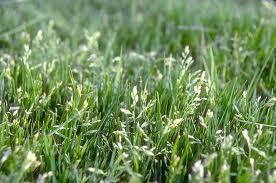
Over the years at Glen Echo I've heard many ask about the poa on our greens. Some think its gone away.  Our poa has not gone away.  Poa annua is a part of all of our putting surfaces. In 1995 when the putting surfaces were gassed and grassed with a blend of Cato/Crenshaw Bentgrass, there was not any poa. 20 years later, we have greens that average 20% with some as high as 50% or more. We've made efforts to reduce the amounts over the last 7 years since I have been here. Some years it seems like we take 2 steps ahead and other years we take 3 steps back. The poa right now on the greens has a tendancy to be a lighter/lime green looking color with a seed heads interspersed.  The pictures at the bottom of the post points this out. In most cases instead of large patches of poa annua without any bent grass, we now have both bent and poa spread throughout the greens.

A course that has been around for 114 years like Glen Echo can have many different species of poa both annual varieties as well as perennial. As you can see now in some areas of the rough,  poa annua is seeding profusely. We are right in the middle of what is called the seed head flush. Pretty simple explanation is poa annua plants are in full bloom right now. This is charted using Growing Degree Day Models which help to time applications for weed and insect control.

Overall, we've had pretty good timing on our greens and our efforts to reduce seed head production. This is one reason why many have difficulty seeing the poa on the greens because we reduced the negative impacts that plants can make on ball roll and have reduced the overall seed head production on our greens. We've not eliminated seed heads by any stretch but it has improved. This season has seemed to be one of our best since I've been at Glen Echo.

Factors we  continue to fight here at Glen Echo when it comes to reducing the amount of poa annua on our greens.

  • Greens have not been grassed since 1995. Most clubs in the district have regrassed since then and some have done it twice. This is not an option at this time. The course cannot close from September to May/June the next season. A number of clubs in town were able to renovate greens due to large scale MSD projects which helped fund improvements. Some also grassed before the economic downturn in 2008.
  • The variety grasses we have now were developed in the 80's and probably have 25-50% less grass plants per foot then the new varieties. The tight turf does help to reduce poa from over taking a green. 
  • Greens have no drainage except natural flow except #9. Installing drainage using a technique by a few contractors in the country can cost $ 7-10,000 per green. It does improve playability, dries quicker and can reduce poa stranglehold with drier conditions.
  • Trees which cause shade and reduce air movement keeping greens wetter longer.
  • No fans on greens. Air movement helps in drying greens which poa annua does not appreciate. At least 6-8 greens on the course could use a fan. $ 7,000 per fan plus electric install which could double cost per green.
  • Poa population, seed bank on a 114 year old course. Using some products on he market with the percentage of poa annua on our greens could lead to massive turf loss. Newer grassed facilities can use these chemicals because there percentages of poa annua are so much smaller.
So what is a guy to do if we cannot actually make  any major changes to infrastructure at this time:

  • Improve and expand  knowledge to combat  issues regarding our greens.
  • Provide proper cultural practices to our greens, ie fertilization, water, aeration, disease management, and many other factors to encourage bent and discourage poa.
  • Add newer varieties of bent grass in the fall with seeding. Called inter seeding, some advances are made but it is not easy with greens being kept at normal cutting height and fall weather having a tendency to be dry which does not encourage baby plants at 1/10 of an inch to stay alive.
  • Continue to use growth regulators to keep poa annua in check or reduced if conditions are right. 
  • As the financial climate improves, contract drainage installation to our worst greens.
  • I've left this for last but remove trees that are creating excessive shade to green sites. East and southern exposure trees are the enemy to all of us because they suck the life out of our greens. They reduce sunlight in the morning and mid-day and if sunlight is reduced you are guaranteed to have a reduction in air movement across the green surface.  Scientists says wind speeds of 4 MPH or more are needed to allow the plant to open its stomates which allows the plant to exchange gases, reduce moisture and heat build up in the plant by encouraging its processes such as respiration and food production to happen.(simplified version) Lack of plant processes leads to energy reduction, heat stress and senescence of leaves.(physiological decline,death)
The arrows are pointing to areas of poa annua in the 12th green. You cans see some seed heads but not an
all out blooming like you might see on some green surrounds/rough.

Another spot with the darker greenish blue areas of bent grass. I will use a regulator next week that should shrink the poa annua a little further and allow the bent grass to become a little more aggressive. I do all but eliminate the use of this product in the summer. Might tickle it a little this year but have a tendency to shy away until the real heat of summer has left us in September where we hammer it again until winter.

This is showing the back edge of a green and collar on 16. Our collars have a tendency to have more poa annua. Part of the reason for this is the seed bank is higher outside the green and foot traffic/equipment move the seeds onto the green surface. There is also a problem with collar height turf staying alive. The collars are 3 times the height of the green requiring more water to stay alive. We apply water to the greens to keep the greens alive and not enough for the collars. We have to hand water during the summer months to keep the collars alive. Stress on collars is significant and turf is lost. When turf is weakened or lost, poa annua seizes its chance to invade and it does.


Monday, March 31, 2014

Tree Management Plan

We had a couple removals today, one that will lead to improved conditions for a green and surround complex and the second to protect everyone from a hazardous condition.  We still have one more removal on the right of #16, an old Siberian Elm that we were planning to remove but we believe it has a family of squirrels inside of it.  I expect no further removals this season unless something does not leaf out this spring and we will decide if removal should occur immediately or can wait until next winter.

The first tree was the very large oak on the east side of #17 green that had a large void in it that I assume was from a lightning strike many years ago.  During the shade study that I have made over the last few years, #17 green would not receive full sun until 10 a.m. each day.  We are evaluating a couple of ornamental trees to go back in the general area where the removal occurred but the species will be much smaller so they will not interfere with the morning light that the green needs.

The second tree was next to 18 tee and had lost a large part of the crown of the tree last fall.  Gamma tree topped both trees to a pole and our staff will knock the trees down on Tuesday.


Shade on #17 green at 8:54 a.m.

Gamma tree removing rest of limbs from tree.

Finishing off the removal.  Our staff still need to remove the stub on Tuesday.
The staff cleaning up the sticks and cutting up the logs from the removal.
The view from the green at the end of the day.


The wound that went up the first 15-20' of the tree. 

The close up of the crown of the tree at 18 tee.  The whole center of the tree was damaged and exposed.  The larger limbs coming off that same area could have fallen without warning.

A pull back view of the tree and its damaged crown.

The topped tree waiting for our staff to remove to the ground.

This tree was right behind the tree we are removing.  The limb on the lower left goes over the cart path and tee.  A limb fell from this tree and weakened the other limb to the point that it needed to be removed.

The finished product after removal. The removed tree is in the background.


Tuesday, March 25, 2014

Growing Degree Days, Poa Management

The work that we do here at Glen Echo is not necessarily set on a calendar.  There are seasonal schedules and as long as products are applied within a couple of weeks, there are not issues.  There is one early season application to our greens which is timed to within a day based on scientific models.  The model uses growing degree days to determine the date to spray our greens to suppress and or reduce the amount of poa annua seed heads that are produced.  As you know, the seeding of poa annua in the spring to early summer can lead to ball roll not being as smooth as we would like to see on our golf greens.  The production of more seed heads also increase the seed bank for poa annua.  Millions of seeds are produced and can be viable in the soil for years just waiting for some thinning of turf to encourage more poa to germinate.  Seed heads are not just produced on greens surfaces, they are produced in the 100's of millions underneath the mass canopy of trees that run along our fairways and roughs.    

Growing degree days are formulas which take the average temperatures for the day and subtracts them from the base number used.

I.E.  The base number for poa annua seed head suppression is 32 degrees.  The high was 38 and the low was 28 yesterday at our weather station. so the mean/avg temperature for the day was 33. Subtracting 33-the base of 32 = 1 growing degree day.  This number is then added to an accumulating total that begins normally around the end of the 2nd to 3rd week of February.  If the number would be negative for a day which it could if the mean temperature is below 32, you have no growing degree days for that date.  Currently we are at 344 growing degree days.  The range to spray is normally around 300 growing degree days, more or less depending upon the year.  The spray we use suppresses or reduces seed heads from about 50-80% depending upon if your timing was correct.  I sprayed 1/2 our greens on Friday and the other 1/2 on Saturday morning. The poa annua on a green, the more potential for seed head production.  This is one of the reasons we are trying to encourage sun on our greens.  Bent grass is a sun loving plant and poa annua likes it shady and moist.

Growing degree days models are also used for other weeds such as crabgrass germination and broadleaf weed applications.  Bluegrass weevils and grub control of beetles are a couple of insects that can be monitored using growing degree day models.  Farming relies heavily upon growing degree day models as well in planting of crops and applying pest control measures.

We will make a second application of the growth regulator products twenty one days after the first application.  The spray we use is a mixture of Primo which is our main growth regulator product for greens and Proxy which reduces the seed head formation.  With early season aeration in March, our seed head suppression application usually falls around the time of aeration. It can delay healing slightly but I think it might only delay it a couple of days at the most.  This season, a majority of our aeration was finished five days before the application of this product mixture.

Seed heads that are produced do have a tendency to be shorter and tighter and do not effect ball roll since the greens are regulated.  Ball roll in general should improve as the aeration heals and  the plant growth regulators PGR begin to do their work.

Saturday, May 4, 2013

Broadleaf weed control in warm season green surround

Finally got some broadleaf weed control on the green surrounds of #5 and #6 in which the back half is mostly bermuda grass.  I am also going to do some minor treatment around the intermediate cut for the poa annua which has popped up.  We missed the winter application on these two green surrounds.  My first intention was to allow it to over run the bermuda and convert it to cool season but it looks hideous.  We have to be careful with spraying these plants out this time of year because the product we will use can move so we have to do this during a dry period and then water it down after it has had time to move into the plant to reduce the chances of a heavy rain rushing the material across the green.  We intend to drill seed these areas in the fall with fescue in an effort to get rid of the bermuda for the most part.  I did get the intermediate spray around #8. The poa annua is mixed with other cool season grass on #8 so we will not make any attempt to remove it until fall when we drill in more fescue and then spray a selective material that will help remove the poa from the other cool season grasses.

You can see the knotweed, henbit and chickweed yellowing from the Momentum application.  Hopefully, I can spray the poa annua in the next week or two to remove it.  

Saturday, April 6, 2013

Poa seedhead reduction application


Each year we attempt to reduce the amount of seed heads that are produced by the poa annua that contaminates our greens.  We use a Base 32 growing degree model to determine when to apply this application.  The application is a combination of 2 growth regulators working in combination to reduce the amount of seed heads which can create ball roll issues.  Heavily infested greens will have more overall seed heads than lower % greens which makes it appear that the product does not work but it does work.  Researchers state that you can expect on average a 50% reduction in seed heads.  If seed heads do occur, one thing the products do is shorten the length of the seed head stem helping to keep it closer in the canopy and not disrupting ball roll as much.

We started to accumulate data this year around the end of February.  The model involves averaging the high and low temperature of the day and subtracting that number from 32, the base number and then accumulating the degree days until they add up to the target range.  See the example below.

       April 5                High Temp  68
                                  Low Temp  39
                                  Avg Temp   54
                                Base Temp    32
              Avg Temp -Base Temp   22  growing degree days

Each day, the growing degree days accumulate.  This season, we did have some days when the average temperature was below 32 but you do not subtract a negative number from the total.  The model we use calls for application around 300 growing degree days.  Right now we are at 367 growing degree days which is a little higher in than zone than I like to be but I think we will be okay.  We will make a second application in 21 days.  Last season, our application was made on March 5th and we hit our current total of growing degree days on March 10, 2012.  What a change from one year to the next.  The average for us is usually about the 3rd week or so of March.

Michigan State has a site that we utilize http://www.gddtracker.net if you have interest in exploring this subject further.  There are models for crabgrass, poa annua, and broad leaf weeds.


Wednesday, March 23, 2011

Poa annua in #7 fairway

If you've played the course over the last couple of weeks, you have seen poa annua in various stages of death in our fairways and tees.  There is one fairway, #7 that did not get sprayed with our RoundUp/Preemergent application due to some conflicts with the weather.  #7, especially at the beginning has a large crop of poa that has recently increased in size due to the warmer weather.  I just got out and sprayed it today with another product that is safe to spray as the turf comes out of dormancy.  You should see the effects of this material on the poa over the next 2-3 weeks.

Large spots of poa annua at the beginning of 7 fairway that will soon be turning yellow and dying.

Wednesday, March 16, 2011

Follow up to Roundup spray for poa on Fairways, tees and green surrounds

The Roundup that we sprayed on our dormant fairways/intermediate rough, warm season green surrounds and tees is working.  Yellow plants all over the property.   There a few plants of bluegrass, rye and fescue that will probably not die from our application due to the rate being too high for safe application on dormant zoysia.  In those cases, we can carefully spot spray with another product over the next few weeks. 

Poa annua right after application about 3 weeks ago.  Green and healthy.


Poa annua 3 weeks later is yellow, chlorotic and dying.

Tuesday, March 8, 2011

Poa annua seedhead reduction/prevention

 One of our more important programs for spring golf in our area is an application of growth regulators to reduce the effects that tiny poa annua seedheads have on ball roll and smoothness of our greens.

Poa annua with seedheads.
We utilize an internet site which helps us count  growing degree days which are used for the timing of various applications to reduce the impacts of certain weeds, diseases, and insects.  The 32 degree day model is used widely to determine when to spray our products to reduce poa annua seedheads.  From the modeling that I have been following over the last couple of weeks, I decided to make our application last Thursday morning.  The products that we utilize allow our greens to keep a decent color but do not totally eliminate seedheads.  Michigan States research determined that we can count on about 50% reduction in seedheads on average or better.  Our greens range from 10% to 60% in poa annua contamination.  50% or better is good on a less contaminated green but not as good on a higher contaminated green.  Other tools that are at our disposal during this period if the chemical treatments don't work as well include: 
  • Verticutting which stand up the seedhead allowing the seedhead to be cut off completly.
  • Topdressing and brushing which keep the surfaces smoother and cut off excess plant material
  • Additional growth regulators which keep the poa plant weakened and shortened.

What is a growing degree day?  The high and low temperatures of the day are added together and are then divided by 2 to get the average temperature for the day.  I.E.,  our weather station reported a high of 67 and a low of 52 which is a total of 122.  Divide 122 by 2 and you get 61(Average temperature for the day).  Subtract 32 from 61 and you get 29 degree days.  The degree day count in our area usually begins between  mid-February to the 1st of March.

Over the years, scientists have looked at how temperatures trigger pests to begin their process which create havoc on turfgrass.  This can include egg laying of insects to seedheads forming on poa annua to disease models for spraying early season preventative applications of summer root diseases.

Ohio State University has an informative explanation on the growing degree day model as well.


A current picture of poa annua on our practice green without seedheads.


Saturday, March 5, 2011

Dye around Greens

Anyone who came out and played over the last couple of days has seen some marker dye being used around our greens, fairways and tees.   I was completing the preemergent/roundup application in our warm season turf areas which controls in season goosegrass and crabgrass germination and will kill the poa annua that pops up in places.  The staff used a 4x8 sheet of wood to drag around the edge of the collars to protect our green/collar turf from any over spray as we drove around the collars.  We might have some small hand applications to spot treat over the next few days due to bunkers being too close to the green surface or the sprayer moved a little further out then planned.  We will be applying preemergent and weed killer to our cool season first cut rough toward the end of March/early April.

Green #16 complex and the marker dye which indicates to the operator where the plant protectant materials have been applied.  

Sunday, February 20, 2011

Preemergent/Poa annua applications to Dormant Zoysia

During the month of February or very early March, we apply our preemergent(Ronstar) and non selective weed killer(Round Up Pro) to our Zoysia areas of the golf course; fairways, tees and green surrounds that are solid warm season grass.  We make the application this time of year because the Zoysia grass we are trying to protect is dormant and will not be injured from the spray.  Round Up is safe to use only when warm season turf is dormant.  We wait for temperatures to rise above freezing and sunny days.  The chemical will move more readily through the plant if the conditions are warmer and sunny.

Our first target we are trying to control is any cool season grass, mainly poa annua which has germinated in the fairway/intermediate cut/ tees and green surrounds.  This application will also kill knotweed and will restrict the growth of rye, fescue and blue grass.  If this material is not sprayed out, there will be large clumps of weed grass that seeds profusely and will leave our fairways very clumpy until we begin to mow in late April/early May.


Our second target is to prevent crabgrass and goose grass from germinating in the spring and summer.  We make this combination tank mix to to reduce wasting time and energy of a second application.  This material will lay dormant on the surface of the soil until it is needed in the spring.  This year, we are using Ronstar because it has the least negative activity on the root systems of our warm season grass.  We had great warm season turf last year and I want to continue that push into this year as well.  This material does cost more but it is wise to change chemistry's every few years to reduce the potential for resistance.  We will be using Barricade on our rough areas in late March to early April along with a broad spectrum selective weed killer.
Here's the spray rig after the tank was emptied this morning.  We utilize a soap marking system and some green dye to help outline the areas that we spray.
This picture is along the right side of #18 fairway.  You can see how excessive shade encourages poa annua.  Without the leaves on the trees,  you can still see the affects of the shade.  If the poa was not sprayed, it would begin to choke out the zoysia.  Our trees provide character for the course but also do encourage our poa annua population to explode.

Wednesday, March 24, 2010

Discolored turf next to some greens

Those of you that have been out to play the course in the last 7-10 days have probably noticed the off color look of our greens.  I have explained our regulator program in a previous post and how we are trying to encourage our bentgrass and discourage the growth of the poa annua.  As I was checking some greens the other day, I noticed a distinct line between the surround area that received some of the same spray treatment as the greens and the area outside the treatment area.  I took a picture to illustrate how the spray affects the turf both inside and outside the spray zone.       

One of the benefits of having cool season turfgrass around our greens is the ability to spray products which are antagonistic to the poa annua and can injure or kill it.  With millions/billions of seeds being produced on our property, poa is always trying to invade into an area where it does not currently exist, namely the newly sodded fescue areas.  As we spray our greens which are mostly round in shape, we cannot shut off our 3 spray booms exactly as we cross the line between the green and surround.  The spray coming out onto the surrounds provides not only added benefits in reducing poa but also can protect the turf from disease and other pests.  The surround areas do receive control products for disease and insects during the season but not as frequently as the greens because the turf is at least 20 times longer which makes for a healthier, less stressed plant.  We sprayed a fertilizer/micronutrient package to the greens today which should have a positive effect on the color of our greens in the next few days. 

In the picture below, my camera case in on the spray line between the two distinct areas next to the green.  To the left of the case is the area that is coming out of winter naturally and did not receive any spray treatment.  To the right of the case and adjacent to the green is the area that received treatment and shows some discoloration.     

 Left side of 12 green/surround looking from front to back.


Thursday, March 18, 2010

Follow up of RoundUp application on zoysia fairways

Here is an update on our RoundUp dormant fairway application that was made in February.  Poa plants are turning yellow and beginning to die in areas of the fairways where they emerged.  As mentioned in previous posts, poa is a prollific seeder and can be very competitive in shady and or wet areas of fairways.  The plants can weaken the desired species which is the zoysia that we want to protect and encourage to grow. 

Right side of #17 along the intermediate/fairway cut.

Friday, March 12, 2010

Determining when a poa annua seedhead will attempt to form in the plant

That's the question many superintendents are pondering at this moment.  When should I apply the control products to my greens to reduce the effects of poa annua seedheads?(Click on poa annua for great power point regarding this weed)  One of the great benefits of bentgrass which is the plant that we want to be the dominant species on our greens is that it does not form seedheads at green heights of cut.  Poa annua on golf greens can continously produce seedheads from the beginning of spring until temperatures near 90 begin to invade our area in June.  Greens being cut under .125" can become very bumpy from this prolific seeder.  Verticutting, grooming, sanding, and dragging greens can reduce the impacts of seedheads slightly but the most effect seedhead control comes from Plant Growth Regulators which prevent the seedhead from  forming in the first place.  

We use a combination of two Plant Growth Regulator chemicals which does reduce the amount of seedheads to a more acceptable level than not applying the products at all.  This combination spray is variable in its working ability but is less harmful than other regulators which can effect the bentgrass more severely by discoloring and possibly thinning the turf.

Rough height poa in full seedhead glory!
We use a model for growing degree days to help us determine the best time to apply our products. 
Growing degree days are determined by the measurement of daily average air temperatures. Farmers, horticulturalists, and superintendents utilize past research which has studied how temperature affects certain weed, insect and disease pests. A specific cycle of life of a pest is signaled when a cumulative number of growing degree days are reached. i.e. Poa annua forming seedheads.


We have been monitoring a website which is assists us in measuring growing degree days. Growing degree day models use scientific research and studies which help to determine when seedheads will begin the process of forming within the crown of the plant.  Proper timing of applications equals the best opportunity to be effective at managing the production of seedheads. 

We begin to measure growing degree days as of March 1st in our area.  The average daily temperature is
measured and is then subtracted from a base temperature model.  There are two base models used  depending upon the intended pest that you are trying to control and the product you are wanting to use.  The models are based on 32 and or 50 degree temperature base.   

We are using the 32 degree model for our Primo/Proxy regulator application.  Below is an example of how we determine the growing degree for a specific day.

GDD = Growing Degree Days

March 11   High Temp       67     
                   Low Temp        47     
                   Average Temp 57     
                                                      
Avg Temp       57
GDD Base   - 32                                                      
              
                       25 GDD for March 11

We then add 25 to the total number which has been accumuating since March 1st.  At this time, our current growing degree model is showing Cahokia, IL which is the second dot from the bottom of Illinois at around 148 growing degree days.  Our model calls for our spray application to be made around an accumulation of 200-250 growing degree days or slighly sooner based on  research recommendations.

We had intended to make our application on March 12th but with rain in the forecast could reduce the effectiveness of the application.  We will be making our first application this Monday based on this model and must do a repeat application in 3 weeks to give us the best control possible.  One of the products we are using takes 7-10 days to become fully active in the plant.  The trick to get the best control is to insure that seedheads have not begun to form in the base of the plant.  If it has, we have missed the initial window but will still get some control.  It is important to be slighly early than late according to research recommendations.  Also, a plant will produce many seedheads during the spring season so goes the ability to get some control if the earliest window is missed.

In an earlier blog, I mentioned a growth regulator for slowly reducing the amount of poa annua in our greens  This material will also help to reduce the effects of poa annua seedlings that do germinate by reducing its growth and keeping it tighter to the canopy of the green which will allow the ball to roll more smoothly.

I found an interesting article in the USGA archives talking about poa annua and how it was being eliminated back in 1927 on a particular course.  Click on the USGA link above for an interesting read.  We've been fighting this weed for a long time.

During this process,, you might notice some greens that have less poa seeding such as 2, 3, or 11 because their overall poa population is much less than greens like 1 or 17 which are more heavily infested.

Tuesday, June 9, 2009

Poa contamination outside of collars/approaches

We have some contamination of poa out into our zoysia/bermuda areas outside the collars. When the poa is small, its not a problem from a playability standpoint but once it starts to grow and gets larger in size, there are issues with these clumps. A short term cure that we are trying is to reduce a walk mower to .75" which helps to cut off the clump and flatten it out. Our intermediate cut mower which goes around this area normally is set at an 1 3/8" which does not reduce the affect of the clump. We are also doing some spot spraying of these clumps to reduce their competitiveness. We also hope the work we are doing to improve some of the zoysia will help the zoysia grow allowing it to compete with the poa as well. Heat will also help reduce the competitiveness of the poa. Early August this season, we will be treating these areas to reduce the amount of poa that germinates from these areas.

The picture above shows the collar cut on the left 1/3, the 3/4" cut in the middle and the taller 1 3/8" cut on the right side. If you enlarge the picture, you can see how the mowing helps to reduce the clump of poa to a size that will help with playability.